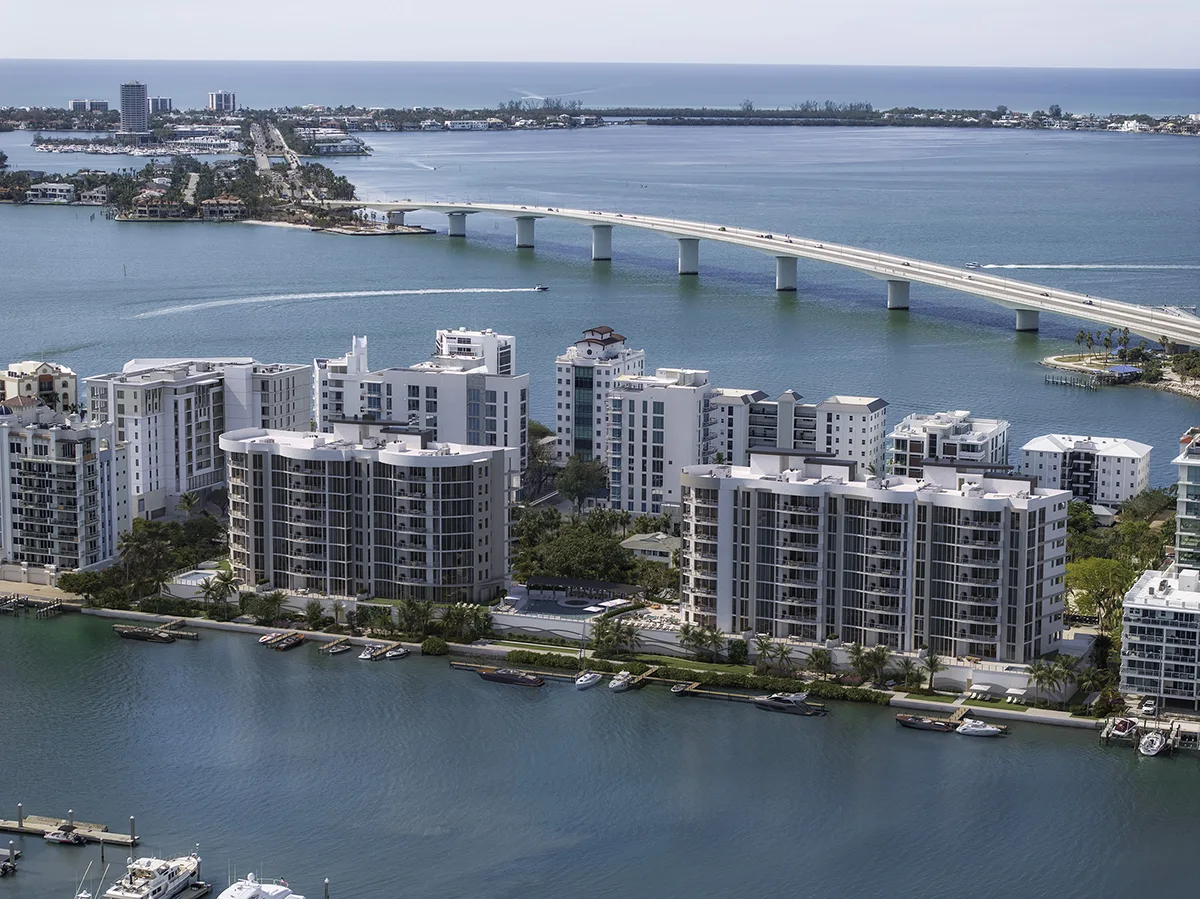
New waterfront condominium development in Sarasota is far more limited than many buyers assume. While demand for coastal living has grown steadily, the supply of new construction luxury condos has remained constrained by factors that extend well beyond market cycles.
This guide explains why new waterfront condo projects are rare in Sarasota and why these limitations are structural rather than temporary. Geography, regulation, environmental protection, and development economics collectively shape a long-term supply ceiling that affects availability across economic conditions.
Geographic Constraints
Sarasota’s waterfront geography places immediate physical limits on development. Much of the city’s desirable bayfront and coastal frontage is already occupied by established residential neighborhoods, public land, and protected shoreline.
Waterfront parcels are also highly site-specific, and whether a site can even support residential construction depends on several factors, including:
- Shoreline depth
- Navigational access
- Surrounding infrastructure
- Parcel configuration
In many cases, parcels that appear waterfront on a map are functionally constrained due to access limitations or adjacent land uses.
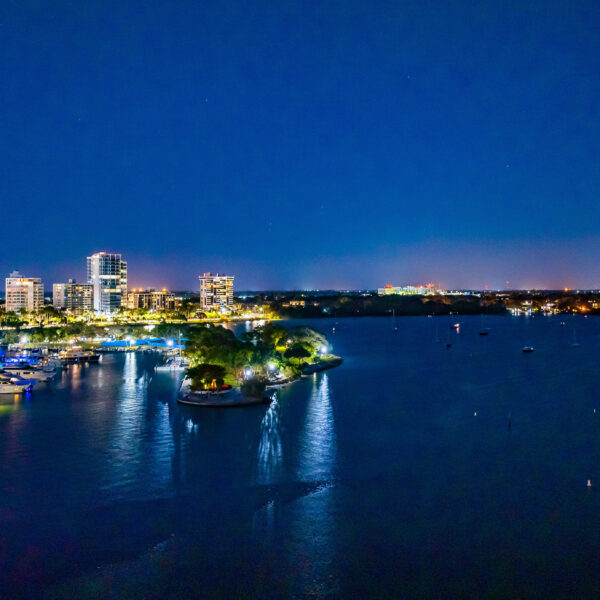
Once a waterfront area is fully built out, opportunities for new development become exceptionally limited. Neighborhoods such as Golden Gate Point show how early development patterns and geography combine to create lasting scarcity, making it an ideal location for boutique, non-branded residential communities that value privacy and exclusivity.
Coastal Construction Rules
Beyond physical geography, coastal construction regulations further limit new waterfront condominium development. Florida’s Coastal Construction Control Line (CCCL) establishes a regulatory boundary intended to protect coastal systems from erosion, storm surge, and storm-related damage. Projects proposed near or seaward of the CCCL face a higher level of scrutiny, including enhanced permitting requirements, engineering standards, and design constraints [1]. These regulations influence key aspects of building, such as:
- Building placement
- Elevation
- Foundation design
- Storm resilience features
Following these rules often increases both the complexity and the cost of a project. Even projects located landward of the CCCL may face additional review depending on site conditions and proximity to coastal resources.
Coastal Construction Approval Layers
| Regulatory Layer | Governing Body | Impact on Development |
| Coastal Construction Control Line (CCCL) | Florida DEP | Height, elevation, siting limits |
| Local zoning and comprehensive plans | City / County | Density and use restrictions |
| Engineering and resilience review | State and local | Higher design thresholds |
| Permitting timelines | Multiple agencies | Longer approval cycles |
Environmental Protections
Environmental protection requirements further constrain waterfront development in Sarasota. Sarasota Bay is a sensitive estuarine system, and development activity is subject to oversight designed to protect water quality, marine habitats, and long-term ecological health.
Organizations like the Sarasota Bay Estuary Program coordinate regional efforts focused on restoration, pollution reduction, and habitat preservation [2]. These initiatives directly influence development approvals by limiting dredging, shoreline modification, and land disturbance.
Over time, these protections reduce the number of sites that can realistically support new residential construction, particularly along the water’s edge.
Environmental Factors Affecting Waterfront Development
| Environmental Factor | Development Impact |
| Estuary water quality protections | Limits shoreline modification |
| Habitat preservation requirements | Restricts dredging and fill |
| Stormwater runoff controls | Increases infrastructure cost |
| Restoration priorities | Reduces developable sites |
Economic Barriers to Development
Even when a site is physically and legally developable, economic feasibility often determines whether a project proceeds. Waterfront condominium construction carries higher costs than inland development due to engineering requirements, insurance considerations, and regulatory compliance.
Rising construction costs, labor constraints, and longer approval timelines further narrow the number of viable projects. Developers must also account for greater exposure to weather-related risk and long-term resilience requirements.
Research from the Urban Land Institute shows how coastal resilience is reshaping development economics in coastal markets, influencing which projects can move forward [3].
Waterfront vs. Inland Condo Development Complexity
| Factor | Waterfront Condo | Inland Condo |
| Engineering requirements | High | Moderate |
| Regulatory review | Extensive | Standard |
| Insurance and risk mitigation | Elevated | Lower |
| Construction timeline | Longer | Shorter |
| Feasible project count | Limited | Broader |
Higher costs and risk profiles narrow the number of financially viable waterfront condominium projects.
Long-Term Supply Implications
Together, these four major forces create a long-term supply ceiling for new luxury waterfront condominiums in Sarasota:
- Geographic Constraints: Limited physical space
- Regulatory Frameworks: Strict building and zoning rules
- Environmental Protections: Safeguards for the bay and shoreline
- Economic Barriers: Higher costs and risks for waterfront construction
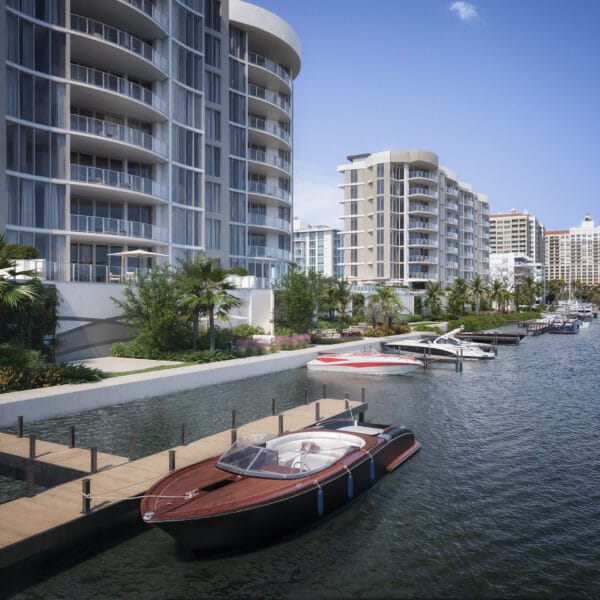
Unlike temporary slowdowns caused by interest rates or market sentiment, these constraints are structural and persist across economic conditions. This is why even in a strong market, a rare opportunity like Amara Sarasota, with its 54 private residences and private marina, represents a significant exception to the rule.
This explains why new waterfront condo supply remains limited even during periods of strong demand. It also shapes how buyers evaluate availability, competition, and long-term ownership considerations.
Frequently Asked Questions
-
Why doesn’t new waterfront condo supply increase when demand is high?
Because most constraints on waterfront development in Sarasota are structural rather than market-driven. Geography, environmental protections, regulatory frameworks, and development economics limit supply regardless of demand levels.
-
Can zoning or regulations change to allow more waterfront condos in the future?
While regulations can evolve, many coastal protections and planning frameworks are designed to preserve shoreline stability and environmental health over the long term. These policies tend to limit expansion rather than encourage additional waterfront density.
-
Does scarcity affect all waterfront areas equally in Sarasota?
No. Fully built-out areas and peninsula locations like Golden Gate Point experience the greatest long-term supply constraints, while inland or non-coastal areas generally face fewer structural barriers to new development.
Sources & Methodology
This analysis is based on publicly available data from government agencies, municipal data, and research from non-profit organizations. All data reflects the most recent information available as of 2026.
- Florida Department of Environmental Protection. Coastal Construction Control Line Program.
- Sarasota Bay Estuary Program. About SBEP.
- Urban Land Institute. Highlights from ULI’s Latest Coastal Resilience Research Report. Urban Land Magazine, September 23, 2024.